
August 3, 2026
A yoga mat may appear simple, but its overall quality depends on the materials selected long before production begins. Comfort, durability, grip, cushioning, and long-term performance are all influenced by the foam used during manufacturing. Choosing the wrong material can lead to inconsistent product quality, customer complaints, higher production costs, and reduced brand credibility. As competition continues to grow in the global fitness market, manufacturers must make informed sourcing decisions to remain competitive.
Selecting premium EVA foam is one of the most important steps in producing high-quality yoga mats. The right material delivers consistent density, excellent resilience, lightweight performance, and reliable durability. Furthermore, sourcing from an experienced supplier helps manufacturers maintain product consistency while reducing waste, production delays, and quality issues throughout the manufacturing process.
The performance of a yoga mat is determined by more than its design or appearance. Material consistency directly affects flexibility, compression recovery, tear resistance, and user comfort. Even small variations in foam quality can result in uneven thickness, poor durability, or reduced cushioning after repeated use.
Moreover, manufacturers serving international markets must maintain strict quality standards across every production batch. Reliable material sourcing helps reduce manufacturing risks while ensuring finished products consistently meet customer expectations.
A professional Yoga Mat Manufacturer understands that selecting dependable raw materials is the foundation of long-lasting product performance.
Many buyers focus primarily on purchasing the lowest-priced material without considering long-term performance. While this may reduce initial procurement costs, it often increases manufacturing expenses through higher rejection rates, customer returns, and warranty claims.
Furthermore, lower-grade EVA foam may have inconsistent density, reduced elasticity, or weaker compression recovery. These issues affect the finished yoga mat's durability and overall customer experience.
Instead of comparing price alone, manufacturers should evaluate performance characteristics such as density consistency, tensile strength, resilience, and dimensional stability before making purchasing decisions.
Customers quickly notice when yoga mats lose their shape, flatten after regular use, or fail to provide adequate cushioning. Once product quality declines, rebuilding customer confidence becomes difficult.
Most importantly, investing in premium materials protects long-term brand value while reducing quality-related production problems.
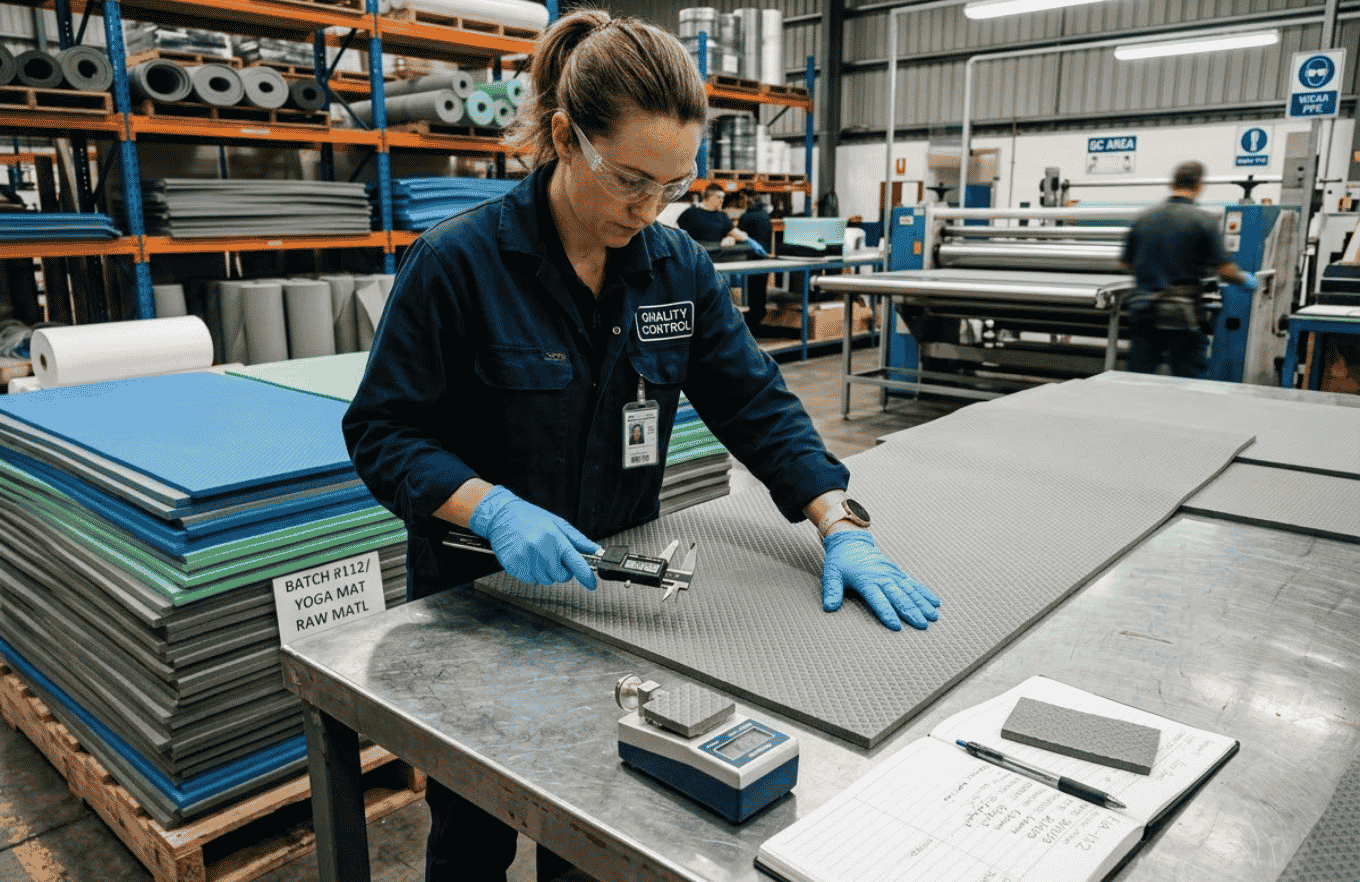
Not all foam materials are suitable for every yoga mat application. Manufacturers must carefully review specifications including density, hardness, thickness tolerance, compression set, and expansion characteristics before sourcing materials.
Moreover, selecting incorrect specifications may result in mats that feel either too soft or excessively firm, limiting their suitability for different user groups.
A reliable Yoga Mat Manufacturer carefully matches foam specifications with customer requirements to achieve consistent product quality.
Professional suppliers provide detailed technical specifications and quality documentation before production begins. These reports help manufacturers verify whether the material meets their intended application requirements.
Organizations committed to high manufacturing standards continuously evaluate raw materials through testing before approving them for large-scale production. Samad Group focuses on delivering reliable foam solutions that support consistent manufacturing performance across diverse industrial applications. Likewise, Samad Group of Industries continues investing in advanced manufacturing technologies to maintain dependable product quality and material consistency.
Selecting the right supplier involves much more than comparing prices or reviewing product catalogs. Manufacturers should evaluate production capacity, quality control systems, technical expertise, and the supplier's ability to deliver consistent materials over time.
Moreover, an experienced supplier understands the specific requirements of yoga mat production and can recommend suitable foam grades for different applications. This guidance helps reduce production risks while maintaining consistent product quality.
A dependable supplier also provides better communication, technical support, and reliable delivery schedules, allowing manufacturers to plan production more efficiently.
Many sourcing decisions focus only on the first shipment, but long-term consistency is what truly supports manufacturing success. Receiving different foam characteristics in every batch can create production delays, dimensional inconsistencies, and higher rejection rates.
Furthermore, maintaining consistent raw material quality allows manufacturers to standardize production processes, improve operational efficiency, and deliver the same product performance to customers every time.

One of the biggest sourcing mistakes is placing large orders without thoroughly testing the material. Every production process has unique requirements, and even high-quality foam should be evaluated under actual manufacturing conditions.
Manufacturers should test EVA foam for density, flexibility, compression recovery, dimensional stability, water resistance, and surface performance before approving full-scale production.
Moreover, production trials help identify any processing adjustments required before investing in larger quantities.
Laboratory specifications provide valuable information, but real-world testing offers even greater confidence. Manufacturers should monitor how the foam performs during cutting, lamination, embossing, storage, packaging, and repeated product use.
Long-term performance testing helps identify issues that may not appear immediately after production. Most importantly, thorough evaluation reduces warranty claims while protecting customer satisfaction and brand reputation.
Companies committed to continuous quality improvement regularly perform extensive product validation before introducing new materials into production. Samad Group emphasizes manufacturing consistency through rigorous quality control practices, while Samad Group of Industries continues advancing foam manufacturing technologies to support reliable industrial applications.
Choosing the right material requires a structured evaluation process rather than relying on price alone. Manufacturers should compare technical specifications, review supplier capabilities, verify quality certifications, perform production testing, and confirm long-term supply reliability.
Furthermore, maintaining close communication with suppliers allows manufacturers to resolve technical questions quickly while improving production planning. Building long-term partnerships also creates greater consistency across future production batches.
Most importantly, investing time in supplier evaluation reduces manufacturing risks, improves product quality, and strengthens customer confidence in the finished yoga mats.
Partner with Samad Group for premium EVA-Foam solutions backed by technical expertise, consistent manufacturing quality, and dependable support that helps your yoga mat production achieve lasting performance and customer satisfaction.
Sourcing high-quality EVA-Foam is one of the most important decisions in yoga mat manufacturing. Avoiding common mistakes such as selecting materials based only on price, ignoring technical specifications, overlooking supplier capabilities, and skipping product testing leads to better manufacturing outcomes. Furthermore, careful supplier evaluation ensures consistent product quality, improved efficiency, and stronger long-term business growth in today's competitive market.
EVA-Foam offers lightweight cushioning, excellent flexibility, moisture resistance, and long-lasting durability, making it an ideal material for producing high-performance yoga mats.
A Yoga Mat Manufacturer should evaluate foam density, compression recovery, dimensional stability, supplier reliability, technical specifications, and product consistency before making purchasing decisions.
Manufacturers can reduce sourcing risks by testing material samples, reviewing technical documentation, verifying supplier capabilities, and establishing long-term partnerships with reliable foam manufacturers.