
October 1, 2026
Choosing the right adhesive can directly affect product quality, production efficiency, and customer satisfaction. For businesses working with footwear, leather, plastics, textiles, or other demanding materials, selecting an Industrial Adhesive Manufacturer requires more than comparing prices. Bond strength, application requirements, technical support, consistency, and scalability all deserve attention before making a long-term decision. A suitable adhesive partner should understand how bonding behaves under real production conditions and provide products that fit the intended application. In this blog, we look at five practical things brands should check before finalizing an adhesive manufacturing partner, with particular attention to footwear and leather applications.
The first consideration should always be whether the adhesive is designed for your specific bonding requirements. Different materials need different bonding characteristics, so a product that works well on one surface may not deliver the same results elsewhere.
For footwear manufacturers, PU Adhesive for Shoes should provide strong adhesion while maintaining flexibility during repeated movement. Sole materials such as TPR, PVC, PU, EVA, natural rubber, and nitrile rubber can require different bonding considerations, while uppers may include leather, synthetic leather, suede, or canvas.
A strong initial bond is useful, but long-term performance matters more. Heat resistance, peel strength, flexibility, and resistance to plasticizers can determine how well a finished product performs during everyday use.
Adhesive performance should remain predictable from batch to batch. Inconsistent viscosity, drying behavior, or bonding strength can create production problems, rework, and unnecessary material waste.
When assessing an Industrial Adhesive Manufacturer, brands should ask about quality controls, testing procedures, production consistency, and how product specifications are maintained across manufacturing batches. A manufacturer with established research and development capabilities can also respond more effectively when application requirements change.
Samad Group has maintained a formal R&D function since the 1980s, focused on evaluating processes, improving operations, and maintaining quality output.
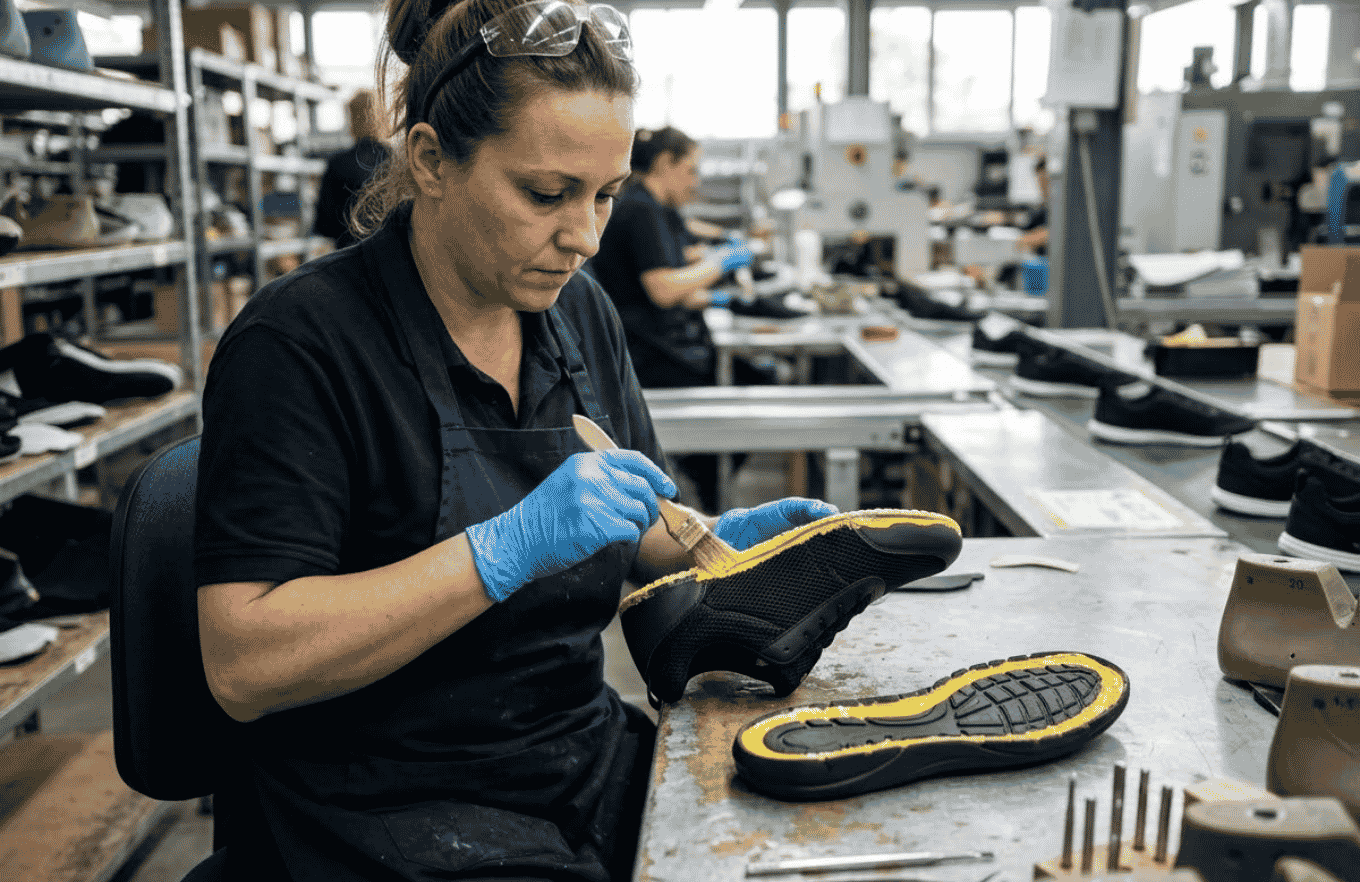
An adhesive should perform in the environment where the finished product will actually be used. Footwear, for example, can experience heat, moisture, repeated flexing, and mechanical stress.
For applications requiring demanding sole bonding, Profix PU Adhesive is formulated for footwear and leather applications, with heat resistance and plasticizer resistance supporting demanding bonding conditions. Its transparent finish can also help maintain a clean appearance where visible glue lines would affect the final product.
Surface preparation and application technique can influence final bond performance. Depending on the materials, priming may be necessary, while applying adhesive to both surfaces, allowing tack-drying, and heat activation before pressing can support optimal results.
A useful adhesive partner can provide solutions across related applications rather than forcing every bonding requirement into one formula. PU Adhesive for Shoes may be primarily associated with footwear, but PU bonding technologies can also serve leather goods, automotive interiors, synthetic materials, fabrics, and technical repairs.
For example, Profix is designed for bonding soles and uppers while also supporting applications involving leather components, automotive trimming, rubber, synthetic materials, textiles, foams, and plastics. This versatility can simplify sourcing for businesses with multiple product lines.
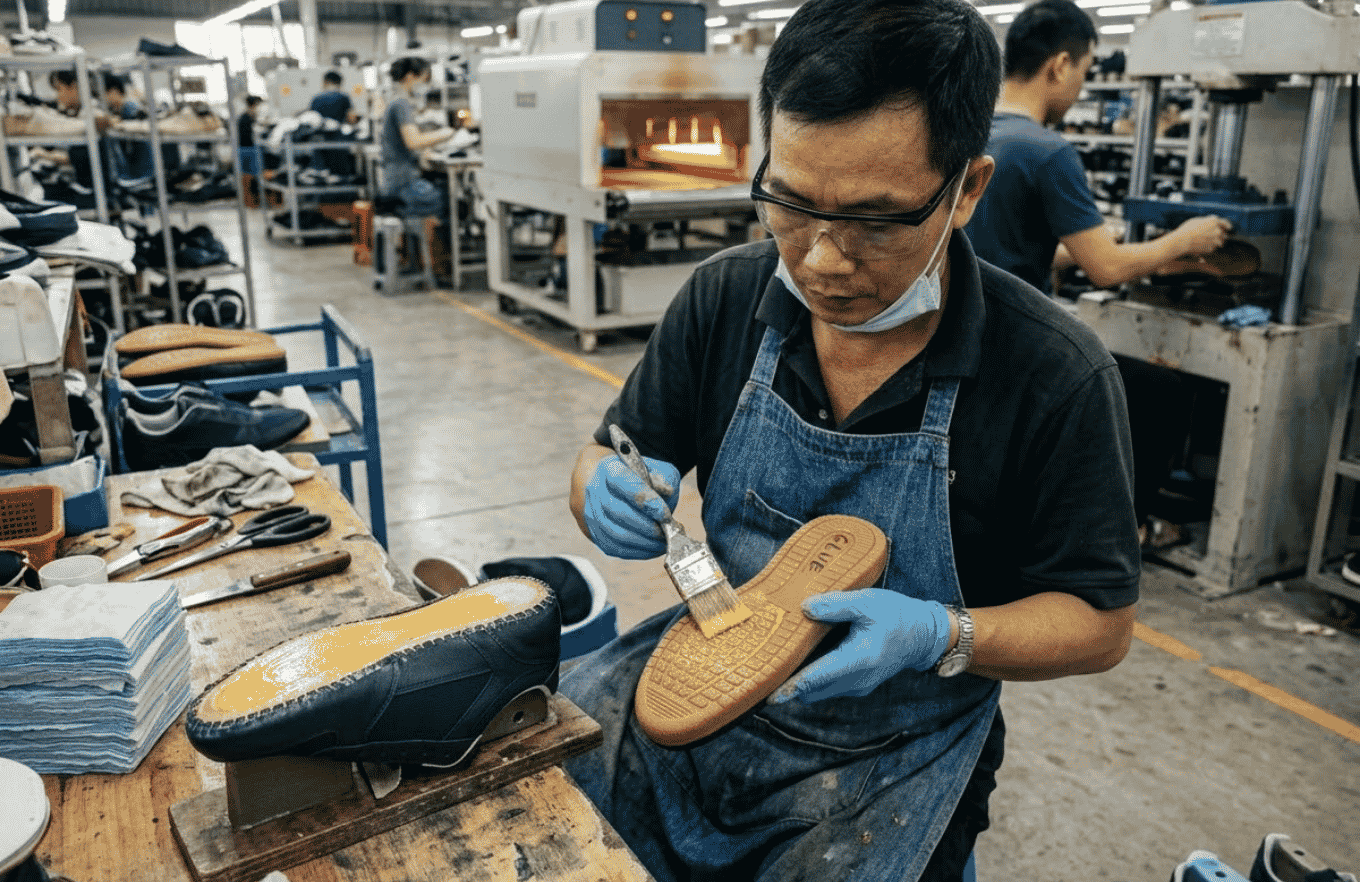
Your adhesive requirements may change as production volumes grow, new products launch, or export markets expand. Therefore, the right partner should have the manufacturing infrastructure and technical capabilities to support future requirements.
Samad Group of Industries has built its operations across multiple specialized business verticals and maintains an international presence in more than 10 countries. Its adhesive division offers products ranging from shoe adhesives to contact-based bonding solutions.
Furthermore, certifications, testing capabilities, R&D investment, sustainability practices, and production capacity can provide useful indicators when comparing suppliers.
Finalizing an adhesive manufacturer should involve more than checking product price or availability. Application performance, consistency, real-world durability, versatility, and scalability all influence whether a supplier can support long-term production needs. Samad Group of Industries reflects how manufacturing experience, technical development, and diversified capabilities can contribute to evolving industrial requirements.
Talk to Samad Group today for adhesive solutions designed to support stronger bonding, consistent production, product quality, and evolving footwear manufacturing requirements.
Brands should evaluate application suitability, bond strength, heat resistance, product consistency, technical support, quality controls, production capacity, and scalability.
PU Adhesive for Shoes can provide strong and flexible bonding between different sole and upper materials while supporting demanding footwear applications.
Profix PU Adhesive is designed for sole bonding and lasting performance, offering heat resistance, plasticizer resistance, and a crystal-clear finish for demanding footwear applications.