
April 28, 2026
Contact adhesive has become an essential bonding solution in modern furniture manufacturing. As furniture designs grow more sophisticated and materials become more diverse, manufacturers need adhesives that provide strong bonding, fast curing, and reliable durability. Traditional glues once dominated woodworking processes, but modern furniture production requires more efficient and versatile solutions.
Furniture manufacturers increasingly rely on contact adhesives because they create instant bonds between surfaces, improve production efficiency, and ensure long-lasting structural stability. In large-scale manufacturing environments, adhesive performance directly affects product quality and manufacturing speed. Understanding how contact adhesive for furniture improves bonding performance compared with conventional glues helps businesses make informed decisions when selecting adhesive solutions for furniture production.
Contact adhesive works differently from conventional glues. Instead of bonding surfaces immediately after application, the adhesive is applied to both surfaces and allowed to partially dry before they are pressed together. Once contact occurs, a strong bond forms instantly.
This bonding process creates uniform adhesion across surfaces, which is particularly important when working with laminates, veneers, or engineered wood panels. Furniture manufacturers prefer this adhesive technology because it reduces clamping requirements and speeds up production cycles.
Modern manufacturers often partner with an experienced industrial adhesive manufacturer to ensure adhesives are specifically formulated for furniture materials and environmental conditions.
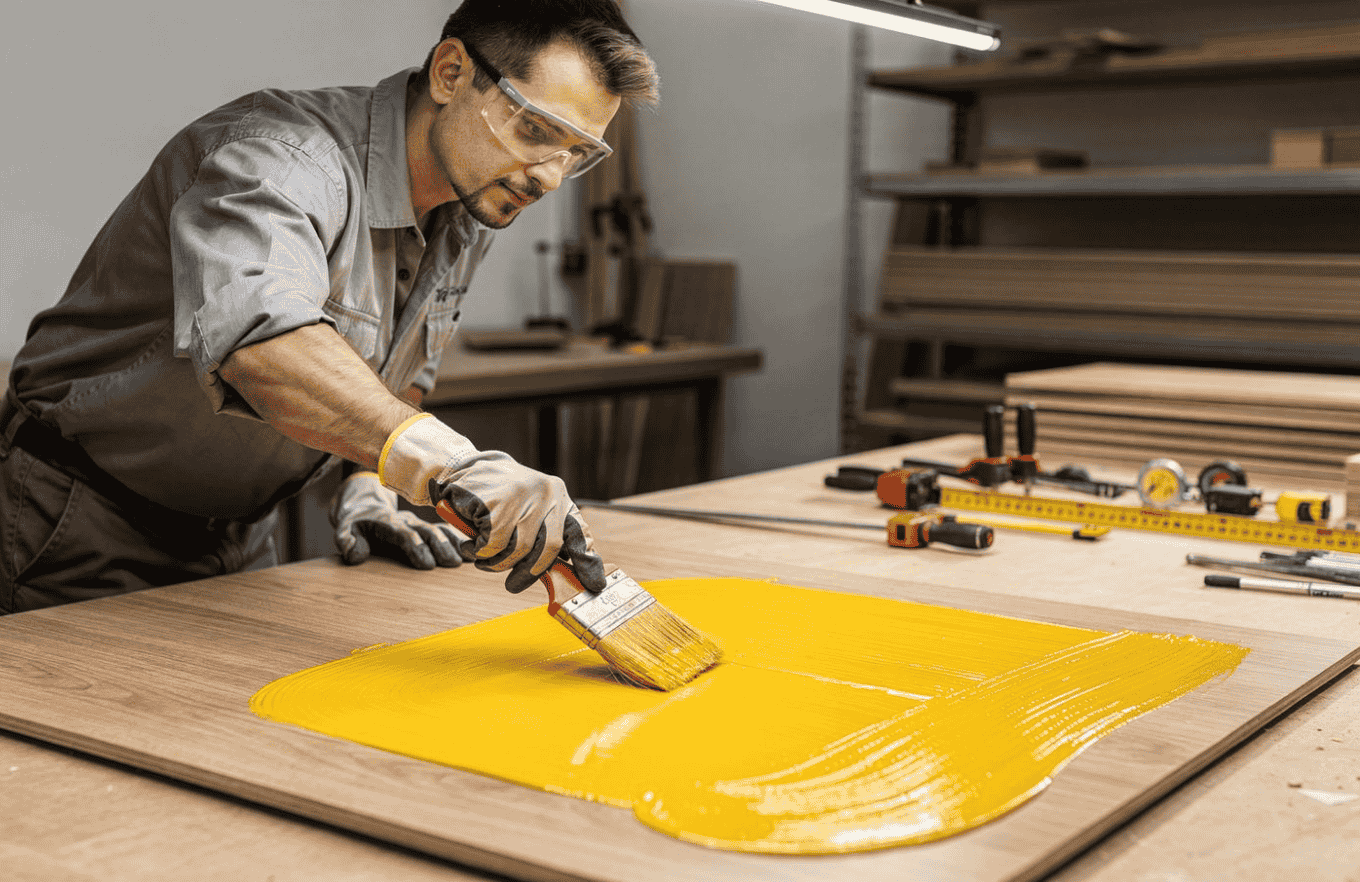
One of the most important advantages of contact adhesive is its superior bonding strength. Traditional glues often require extended curing times and may weaken when exposed to heat, moisture, or mechanical stress.
Contact adhesive forms a flexible yet durable bond that adapts to the natural expansion and contraction of wood materials. This flexibility helps prevent cracks, delamination, or surface separation over time.
Manufacturers associated with Samad Rubber Works have played a role in advancing adhesive technologies that improve bonding reliability for furniture production environments.
Speed is a major factor in furniture manufacturing. Traditional glues often require clamping systems and extended drying times, which can slow production lines and increase operational costs.
Contact adhesive eliminates much of this waiting time. Once the adhesive layers come into contact, the bond forms immediately, allowing manufacturers to move quickly to the next stage of production.
This efficiency allows factories to maintain consistent output while reducing labor costs. For companies producing high volumes of furniture components, faster adhesive curing significantly improves overall productivity.
Organizations such as Samad Group have developed adhesive technologies that support high-speed manufacturing operations while maintaining reliable bonding performance.
Furniture products today involve a wide variety of materials. Wood, laminates, plastics, foam, and upholstery fabrics are commonly combined to create modern designs. Traditional glues often struggle to bond multiple materials effectively.
Contact adhesive performs exceptionally well across different surfaces. It can bond laminates to wood panels, attach decorative veneers, secure foam layers, and adhere fabric components.
Because of this versatility, furniture manufacturers often rely on a single adhesive system for multiple applications. This reduces inventory complexity and simplifies production management.
An experienced industrial adhesive manufacturer ensures that adhesive formulations meet the bonding requirements of diverse furniture materials.
Furniture design relies heavily on visual quality. Adhesive marks, bubbling surfaces, or uneven bonding can ruin the appearance of finished products.
Contact adhesives create smooth and even adhesion layers that prevent surface distortions. Because bonding occurs instantly after surfaces meet, materials stay precisely aligned during assembly.
This precision helps maintain clean edges and professional finishing on furniture panels and decorative laminates. Manufacturers working with Samad Rubber Works often benefit from adhesive technologies that support high-quality aesthetic results.
Furniture products often experience temperature changes, humidity fluctuations, and mechanical stress during transportation and everyday use. Adhesives must withstand these conditions without losing strength.
Contact adhesive maintains strong bonding even when exposed to environmental changes. Its flexible bonding structure absorbs stress caused by the expansion and contraction of materials.
This durability ensures furniture maintains structural integrity for longer periods, improving product reliability and customer satisfaction. Companies such as Samad Group emphasize adhesive formulations designed for long-term durability across diverse environmental conditions.

Although contact adhesive may appear slightly more expensive than traditional glue at first glance, its efficiency often results in lower overall costs.
Because the adhesive spreads evenly and forms strong bonds quickly, manufacturers use smaller quantities compared with conventional glues that require thick layers or repeated applications.
Reduced material waste also helps maintain cleaner production environments. When adhesive usage is optimized, companies save both materials and labor time.
Partnering with a reliable industrial adhesive manufacturer allows businesses to identify adhesive solutions that provide both performance and cost efficiency.
Modern adhesive technology continues to evolve through research and product development. Manufacturers invest in laboratories and testing facilities to create formulations that offer improved bonding strength, environmental resistance, and application efficiency.
Innovations in polymer chemistry have enabled adhesives to deliver stronger bonds while remaining flexible and easy to apply. These advancements have transformed furniture manufacturing by simplifying assembly and improving product durability.
Organizations connected with Samad Rubber Works continue to explore advanced adhesive technologies that support modern industrial requirements.
Furniture manufacturers constantly look for ways to improve production efficiency and product durability. Contact adhesive provides a balanced solution that addresses both needs.
It allows faster assembly, stronger bonding, and cleaner finishing while supporting a wide range of materials used in furniture construction. These benefits make contact adhesive one of the most reliable bonding solutions available for modern furniture manufacturing.
Businesses that collaborate with experienced adhesive producers such as Samad Group gain access to advanced bonding solutions that improve both production performance and product quality.
Partner with Samad Group for high-performance contact adhesive solutions designed to improve furniture durability, streamline production efficiency, and deliver consistent bonding results across modern manufacturing operations.
Modern furniture manufacturing requires adhesives that deliver strength, efficiency, and reliability. Contact adhesive for furniture offers several advantages over traditional glues, including faster bonding, stronger adhesion, and improved durability. These benefits allow manufacturers to streamline production processes while maintaining high product quality. From laminates and veneers to upholstery and foam materials, contact adhesives provide versatile solutions for complex furniture designs. By working with trusted manufacturers such as Samad Group, businesses can access advanced adhesive technologies that support efficient production and long-lasting furniture performance.
Contact adhesive for furniture provides stronger bonding, faster curing, and improved durability compared with traditional glues used in furniture assembly.
An industrial adhesive manufacturer develops specialized adhesive formulations that improve bonding strength, speed up assembly processes, and support modern furniture materials.
Contact adhesives can bond wood panels, laminates, veneers, fabrics, foam, and other decorative materials used in furniture production.