
October 1, 2026
Synthetic rubber has long been used in fitness products because it offers flexibility, grip, resilience, and cushioning. However, its noticeable odor can affect the first impression of a yoga mat and even discourage regular use. For Yoga Mat Manufacturers, controlling this issue has therefore become an important part of material selection and product development.
The challenge is not simply about making a mat smell better. It involves understanding material composition, processing conditions, ventilation, surface treatment, and storage. Modern manufacturing approaches are helping address these concerns while maintaining the performance users expect. In this blog, we explore why synthetic rubber develops odors and how material innovation is helping manufacturers create more comfortable, practical, and user-friendly yoga mats.
Synthetic rubber can release volatile compounds left behind from raw materials, additives, curing agents, or processing. When a newly manufactured mat is exposed to warmth, these compounds may become more noticeable.
The intensity of the odor can vary depending on formulation, manufacturing temperature, curing efficiency, and storage conditions. Therefore, odor control begins much earlier than the final packaging stage.
Selecting materials with controlled compositions can reduce unwanted emissions while preserving flexibility and durability. This is where EVA Foam offers an interesting alternative for certain yoga mat applications.
Unlike many rubber materials, EVA Foam has a closed-cell structure that provides lightweight cushioning, moisture resistance, and easy maintenance. These characteristics make it useful when manufacturers want to balance comfort with a cleaner user experience.
Modern Yoga Mat Manufacturers are looking beyond traditional rubber formulations and focusing on the complete production process.
Moreover, better control over heating, curing, and cooling can help reduce residual compounds within finished materials. Controlled processing also supports greater consistency from one production batch to another.
Furthermore, proper post-production ventilation can allow residual odors to dissipate before mats reach consumers. Packaging also matters because tightly sealed materials can trap odors for extended periods.
Most importantly, manufacturers need to consider odor alongside grip, density, elasticity, durability, and safety rather than treating it as an isolated issue.

For manufacturers evaluating alternatives to conventional rubber, EVA Foam provides several practical advantages. Its lightweight construction can make mats easier to transport, while its cushioning characteristics support comfort during repeated exercises.
Its resistance to moisture absorption is another useful feature because yoga mats regularly come into contact with sweat. This can make cleaning and routine maintenance easier. Yoga Mat Manufacturers can also work with different density levels to achieve the desired balance between softness, stability, and resilience.
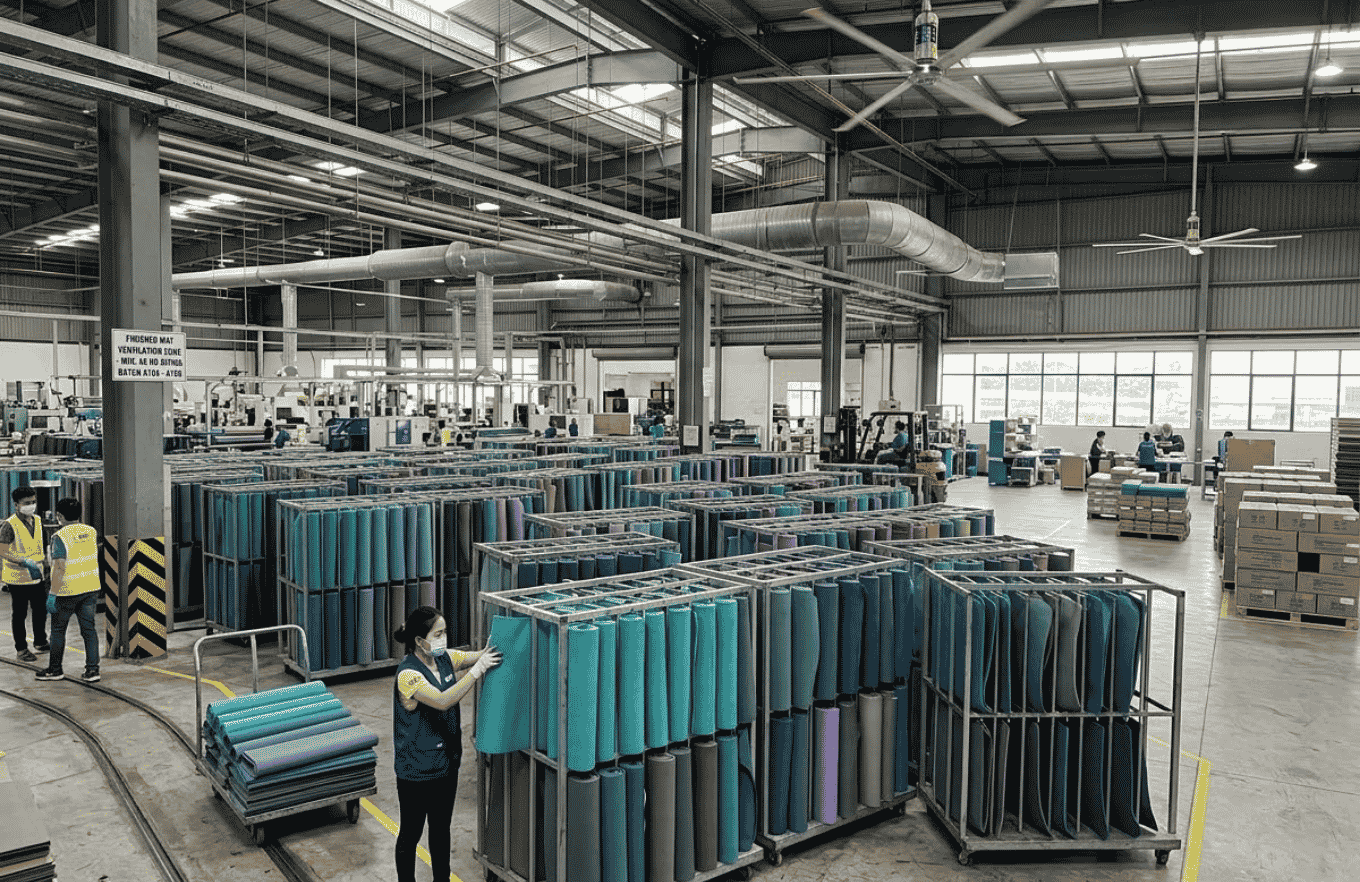
Odor reduction does not depend on material replacement alone. A stronger manufacturing strategy considers:
These steps can help reduce unwanted odor while protecting the characteristics that make a yoga mat functional.
Samad Group has built its manufacturing capabilities around continuous innovation, with a formal research and development function established in the 1980s. Its foam operations also cover closed-cell foam applications across sporting goods and other products.
The future of yoga mat production will increasingly depend on finding the right balance between user comfort, material performance, manufacturing efficiency, and responsible production.
The technical capabilities associated with Samad Group of Industries demonstrate how diversified manufacturing expertise can support material-focused innovation. Its manufacturing history spans rubber, adhesives, foam, apparel, and other specialized products, creating a broader foundation for solving material challenges.
For brands assessing next-generation mat materials, Samad Group of Industries offers a useful example of how research, production knowledge, and material development can work together.
Odor remains a practical challenge when synthetic rubber is used in fitness products, but manufacturing innovation is changing how the problem is approached. Better formulation, controlled processing, ventilation, and alternative materials such as EVA Foam can contribute to a more pleasant product experience.
For Yoga Mat Manufacturers, the goal is no longer simply to produce durable mats. It is to create products that feel comfortable, perform consistently, and meet changing consumer expectations from the moment they are unboxed.
Partner with Samad Group for innovative foam manufacturing solutions designed to support comfortable, durable, and better-performing yoga products.
They can reduce odor through controlled formulations, optimized curing, proper ventilation, suitable storage, and quality testing throughout production.
EVA Foam can be a practical option because its closed-cell structure provides moisture resistance, lightweight cushioning, and easy maintenance.
Manufacturers should also evaluate grip, density, cushioning, elasticity, durability, moisture resistance, processing requirements, and overall user comfort.