
October 31, 2026
A yoga mat should provide a comfortable surface, steady support, and enough durability to handle regular practice. Choosing the right EVA Foam helps manufacturers balance cushioning, flexibility, weight, and resilience without compromising the mat's intended performance. For businesses developing fitness products, material selection also affects production efficiency, product consistency, and customer satisfaction. The right specification depends on how the mat will be used, its required thickness, and the level of support it must provide. In this blog, we explore the key material qualities to consider when sourcing EVA Foam and how thoughtful manufacturing decisions can help yoga mat brands create products suited to their target markets.

Yoga mats need a balance between comfort and stability. EVA Foam is valued for its lightweight structure, flexibility, and cushioning, making it suitable for various fitness and sporting applications.
Its impact-absorbing properties can help soften contact with hard floors during kneeling, stretching, and floor-based exercises. Moreover, the material can be produced in different densities and thicknesses, allowing manufacturers to adjust the feel and performance according to the product design.
When sourcing foam for yoga mats, manufacturers should assess more than softness alone. Material specifications need to match the intended use and expected product lifespan.
Density influences how a mat feels under pressure, while thickness contributes to the level of cushioning. A mat designed for gentle stretching may require different characteristics from one intended for more dynamic routines. Testing samples under realistic conditions helps manufacturers find the right balance.
Repeated rolling, unrolling, and daily use can place stress on a yoga mat. Therefore, manufacturers should assess whether the foam retains its shape and flexibility over time. Consistent material quality can also help reduce unwanted variation between production batches.
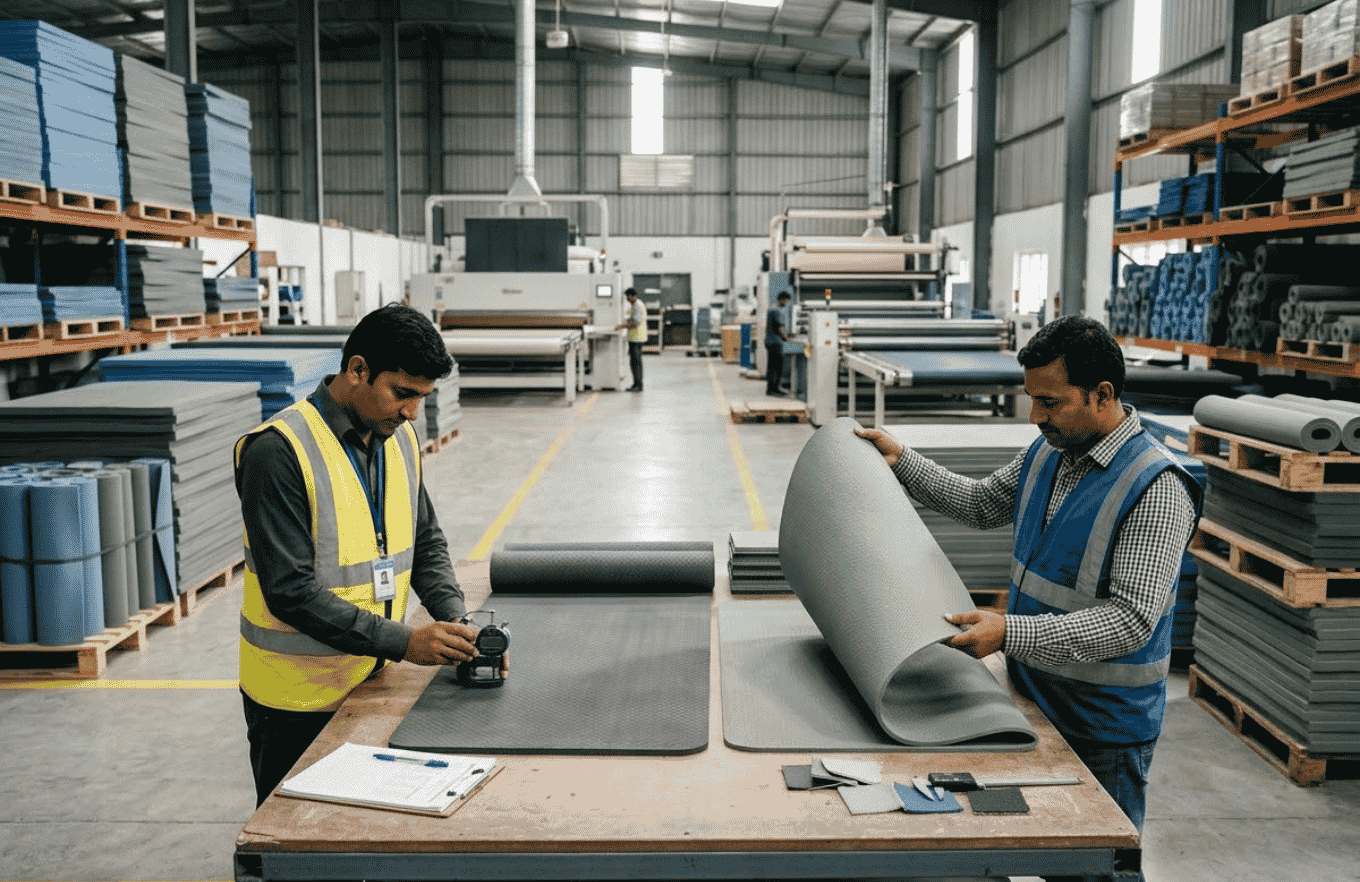
For Yoga Mat Manufacturers, consistency is essential when producing large quantities. Variations in density, thickness, or surface quality can affect the finished product and create avoidable production waste.
Before approving a material for bulk manufacturing, buyers should review samples, confirm technical specifications, and establish quality expectations. Furthermore, clear communication about tolerances and intended applications helps both parties identify potential issues before production begins.
The Samad Group of Industries has manufacturing operations that include foam solutions for diverse applications. Its broader focus on testing and production capabilities reflects why material evaluation matters when developing products for demanding uses.
Material performance is only one part of a successful sourcing decision. Manufacturers increasingly consider resource efficiency, waste reduction, and production practices when selecting materials and suppliers.
EVA Foam can contribute to long-lasting products when its specifications suit the application and the finished mat is properly designed. Longer product life may reduce the need for frequent replacement, although actual durability depends on formulation, construction, use, and care.
For businesses evaluating suppliers, Samad Group offers a starting point for discussing foam requirements, manufacturing needs, and product applications. Buyers should confirm the precise material grade and technical properties needed for their own yoga mat designs.
Choosing the right foam for yoga mats means balancing comfort, cushioning, flexibility, durability, and consistent production quality. Careful evaluation of density, thickness, and material performance helps manufacturers select specifications that match their customers' needs. Moreover, clear quality requirements and realistic product testing can reduce production issues before they affect finished goods. For businesses developing fitness products, a considered material strategy supports better manufacturing decisions and long-term product value. Most importantly, matching the foam to its intended application helps create yoga mats that perform as designed.
Connect with Samad Group to discuss EVA Foam requirements for yoga mats and explore material solutions aligned with your product specifications and manufacturing goals.
Yes, EVA Foam is used in fitness applications because of its lightweight structure, cushioning, and flexibility. Suitability depends on the required density, thickness, and performance specifications.
Manufacturers should evaluate density, thickness, flexibility, surface consistency, durability, sample performance, and quality tolerances before approving bulk orders.
They can select an appropriate foam specification, test samples under expected usage conditions, maintain consistent production quality, and provide suitable care guidance for the finished mat.