
October 3, 2026
The apparel industry is entering a period where speed alone will no longer define success. For Apparel Manufacturers in Pakistan, the road to 2050 will involve smarter production, stronger sustainability practices, advanced technology, skilled people, and closer alignment with international market expectations. Global buyers increasingly look beyond price when selecting manufacturing partners, considering quality, traceability, flexibility, environmental performance, and reliability.
Pakistan already has a strong foundation in textiles and garment production, but future competitiveness will depend on how effectively manufacturers adapt to changing demands. From denim and twill to technical garments, production is gradually moving toward greater integration and efficiency. In this blog, we explore the major shifts that could shape Pakistan’s apparel manufacturing landscape through 2050.
Automation, digital production monitoring, artificial intelligence, and data-driven planning are expected to influence apparel factories significantly. Instead of relying heavily on manual inspection and traditional production planning, manufacturers can use connected systems to identify quality issues earlier and improve workflow visibility.
Real-time production data can help teams understand where delays, material waste, or quality inconsistencies occur. Moreover, predictive systems can support maintenance planning and reduce unexpected machinery downtime.
For Apparel Manufacturers in Pakistan, adopting technology will not mean replacing every existing process. The greater opportunity lies in combining skilled workers with digital tools that make their work more precise and productive.
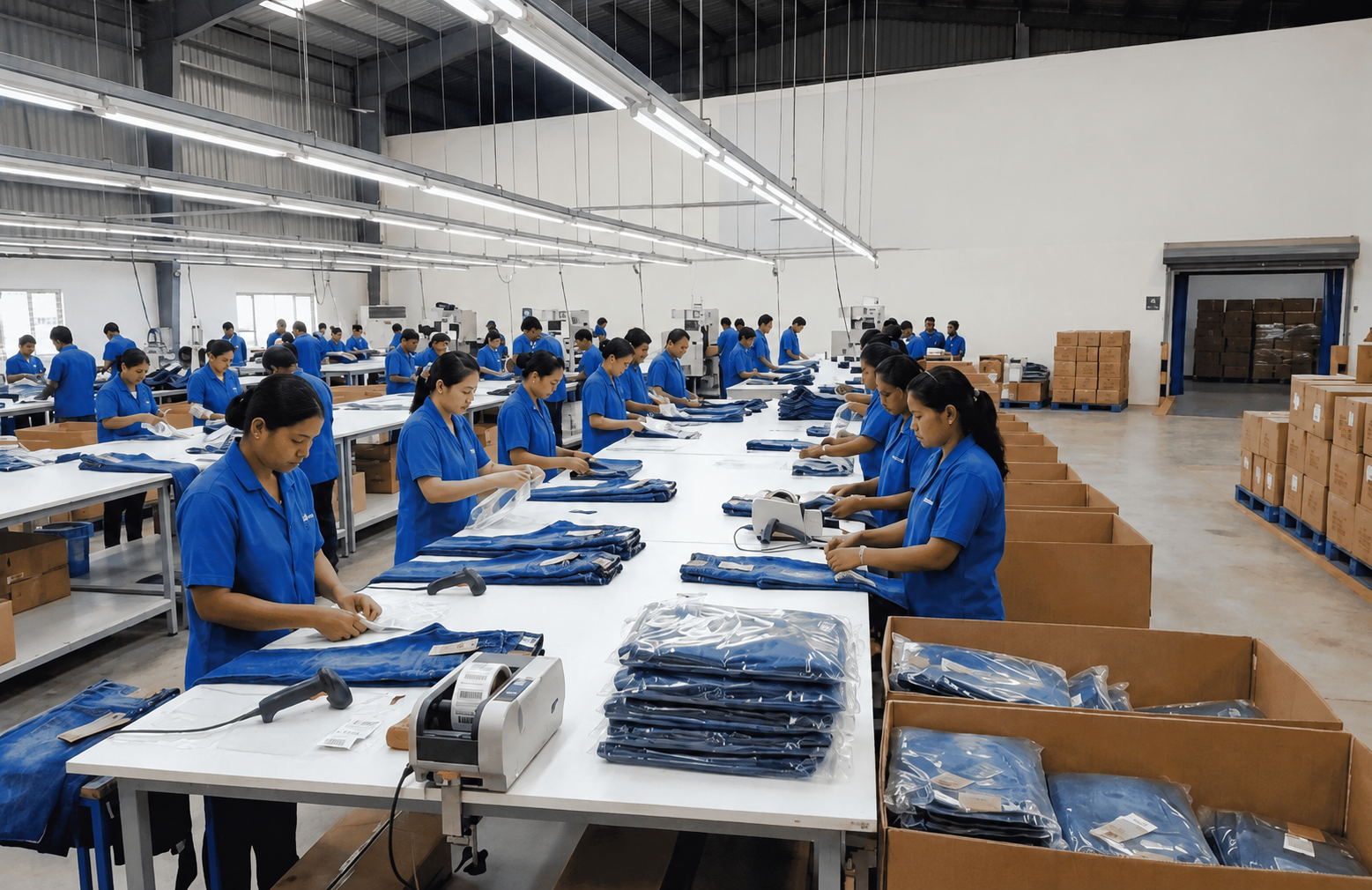
Sustainability is moving from a marketing consideration toward a core manufacturing requirement. Buyers increasingly expect responsible sourcing, efficient resource use, waste reduction, and measurable environmental practices.
Sustainable Apparel production can involve recycled materials, improved energy efficiency, responsible water management, and better waste handling. Furthermore, manufacturers will need stronger documentation to demonstrate how materials and processes meet buyer expectations.
The future will therefore favor factories that can connect sustainability with practical production efficiency rather than treating it as a separate initiative.
The ability to manage multiple stages of production under coordinated operations can provide greater control over quality, timelines, and customization. Samad Group, for example, operates Samad Apparel as a vertically integrated operation covering processes from cut to pack, with specialization in denim and twill woven garments.
Greater integration can reduce unnecessary handoffs between suppliers and production partners. It can also make communication faster when buyers request changes to materials, designs, quantities, or delivery schedules.
For future Apparel Manufacturers in Pakistan, this type of production control could become increasingly important as international brands seek responsive manufacturing partners.
Technology cannot create a competitive manufacturing operation without people who know how to use it effectively. Training in digital systems, quality control, technical fabrics, production planning, and sustainability will become increasingly valuable.
Samad Group has stated that its workforce is trained in future competencies, reflecting the growing importance of workforce development alongside manufacturing capabilities.
Furthermore, research and development will remain central to solving new manufacturing challenges. The company established a formal R&D department during the 1980s, with a focus on continuous evaluation, improvement, processes, and quality output.
By 2050, buyers are likely to expect greater visibility across sourcing and production. Certifications, material information, production standards, and sustainability data may increasingly influence supplier selection.
Therefore, Sustainable Apparel will involve more than choosing environmentally preferable materials. Manufacturers will need to show responsible processes through measurable information and consistent standards.
Samad Group of Industries has built a broad certification portfolio covering areas such as OEKO-TEX, WRAP, CTPAT, GOTS, ISO, and other recognized standards.
The future will likely belong to manufacturers that combine flexibility with scale. Smaller production runs, faster product cycles, technical fabrics, digital monitoring, and responsible manufacturing could become increasingly important.
Most importantly, Samad Group of Industries shows how long-term manufacturing growth can evolve through diversification, R&D, workforce development, and international engagement. Its apparel operations represent one part of a broader manufacturing ecosystem spanning several specialized business verticals.
The journey toward 2050 will require Pakistan’s apparel sector to think beyond traditional production models. Technology, workforce skills, sustainability, vertical integration, transparency, and innovation will increasingly shape global competitiveness. Manufacturers that prepare for these changes today can build stronger foundations for the demands of tomorrow.
Partner with Samad Group for apparel manufacturing solutions built around quality, innovation, responsible production, flexibility, and the evolving needs of global fashion markets.
Technology adoption, skilled workers, sustainable production, vertical integration, quality management, transparency, and the ability to respond quickly to changing international buyer requirements will become increasingly important.
Sustainable Apparel will become more important as brands and consumers place greater emphasis on responsible materials, resource efficiency, waste reduction, traceability, and measurable environmental performance.
They can invest in digital production systems, workforce training, R&D, integrated manufacturing, quality certifications, sustainable processes, and flexible production capabilities that support changing buyer requirements.